01
Current problem
Bring together symptoms, relevant codes and essential vehicle context to define the investigation.
A smart diagnostic terminal concept for professional technicians and automotive service centers. It brings vehicle inspection information, fault analysis and repair assistance together to help technicians work through checks in a more structured way.
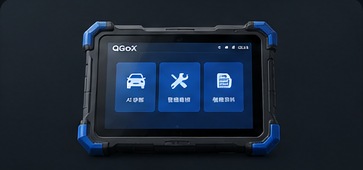
View relevant vehicle diagnostic information in one terminal and reduce switching between tools.
Combine vehicle information with diagnostic knowledge to help organize possible troubleshooting paths.
Connect diagnostic information with follow-up checks and repair guidance to help technicians structure their work.
Designed around screen readability, ease of operation and device durability.
Work is performed based on the actual vehicle, interface conditions and technician judgment.
Work is performed based on the actual vehicle, interface conditions and technician judgment.
Work is performed based on the actual vehicle, interface conditions and technician judgment.
Work is performed based on the actual vehicle, interface conditions and technician judgment.
Automotive repair shops, professional technicians, after-sales service organizations and automotive training environments.
A compact device concept for vehicle data connectivity and access to intelligent diagnostic services, with potential deployment in fixed workshops, mobile inspection and fleet environments.…
View Details →A wearable assistance concept for automotive repair environments, exploring hands-free information access, voice interaction and step-by-step repair prompts.…
View Details →A robotics R&D direction for next-generation automotive service. It explores intelligent diagnostics, human–robot collaboration and repair-task assistance for future workshop automation.…
View Details →The aim is not to display more codes. It is to create a workstation that presents inspections, records observations and guides the next action. These are design goals; final capabilities depend on product verification and release.
Bring together symptoms, relevant codes and essential vehicle context to define the investigation.
Explain the inspection location, tools, prerequisites, test method and expected criteria.
Record normal/abnormal findings or measured parameters for subsequent analysis.
Keep an auditable sequence of checks and decisions for handover and review.
Tell us about your target market, product needs and use case.